A new tankless-water-heater noise means something about the unit or connected plumbing has changed, but the sound alone does not identify one failed part. Rattling, banging, humming, whistling, clicking, or vibration can involve water flow, pipe movement, mounting, a fan or pump on equipped models, mineral restriction, venting, ignition, or an internal component.
What happens with the sound matters most. Note when it starts, whether hot-water flow or temperature changes, which fixtures are running, and whether the unit displays an error. Do not remove the cabinet, adjust gas or electrical parts, or reset the heater repeatedly to reproduce the noise.
If you smell gas, hear a carbon-monoxide alarm, see smoke or sparks, notice a burning odor, find damaged venting, or see water reaching electrical components, stop using the heater and follow the appropriate emergency instructions from a safe location.
A Changed Sound Matters More Than the Sound’s Name
Tankless heaters do not operate silently. Depending on the model and installation, you may hear water moving, an ignition sequence, a fan, a valve, a recirculation pump, or brief material movement as the unit starts or stops. The owner’s manual is the best reference for that model’s expected sequence.
A familiar brief sound without an error or performance change may not have the same meaning as a new noise that becomes louder, lasts longer, shakes the cabinet, or appears with weak flow or unstable temperature. Describe the change instead of deciding what failed.
Useful comparisons include whether the sound happened from the first day of installation, began after plumbing or maintenance work, or developed gradually after months of quieter operation.
Note Exactly When the Noise Happens
The timing can help a technician reproduce the condition:
- **When a hot tap opens:** Record whether the sound begins before hot water arrives, during heating, or only at high flow.
- **While several fixtures run:** Note whether the noise appears only when a shower, faucet, dishwasher, or washing machine adds demand.
- **After a fixture closes:** A knock in the piping immediately after flow stops may require a different evaluation from noise inside the heater during operation.
- **When no fixture is open:** If the system has recirculation or freeze-protection functions, note the time and controller status. Do not assume every unit has those features.
- **At one fixture only:** Compare the affected fixture with another hot-water outlet without using an unsafe temperature.
- **After service or other plumbing work:** Tell the technician what changed and when, without assuming the work caused the noise.
A short recording made from a safe distance can be more useful than trying to imitate the sound later.
Rattling or Vibration
Rattling may involve an exterior panel, mounting point, pipe support, vent connection, valve, fan, pump, or another moving component. Vibration can travel through framing or piping, making the apparent location different from the actual source.
Do not press on the cabinet, vent, or hot-water outlet to stop the sound. The vent and outlet piping can be hot, and holding one part may only move the vibration elsewhere.
From a safe distance, note whether the whole cabinet moves, one visible pipe shakes, or the noise is present only while water flows. A visibly displaced vent, loose wall mounting, or violent movement calls for prompt service rather than continued testing.
Banging or Knocking
A knock that occurs when a faucet or appliance valve closes may come from pressure changes or pipe movement elsewhere in the home. A bang that starts while the heater is actively producing hot water may involve a different flow, heat-transfer, mounting, or equipment condition.
Sound alone cannot distinguish water hammer, an unsupported pipe, mineral restriction, a valve problem, or an internal fault. Do not adjust a pressure regulator, service valve, gas control, or pipe support based only on the noise.
Tell the technician whether cold-water fixtures also produce the knock. If only the hot side is affected, note whether the sound comes from one branch or throughout the home. That comparison helps separate a broader plumbing response from a condition near the tankless unit.
Humming, Buzzing, or Whistling
A fan, pump, transformer, valve, or another operating component may create some sound on a model equipped with that part. A new hum that becomes louder, continues after the usual operating period, or appears with an error deserves evaluation.
Whistling can occur when water or air moves through a restricted or improperly configured path. Possible areas include an inlet screen, service valve, heat exchanger, pipe, vent, or combustion-air path. Those are possibilities, not a diagnosis.
Do not open the cabinet, clear a vent from inside the unit, change gas pressure, or probe electrical components. Record whether the pitch changes with water flow and whether the sound is paired with weak hot-water flow, temperature changes, an error indicator, or an unusual odor.
Clicking, Ticking, Rushing, or Gurgling
Some gas-fired units use an automatic ignition sequence that may include a brief click. Repeated clicking with no hot water or an error indicator is different from one familiar startup sound. Do not attempt to light a burner manually or keep resetting the heater.
Ticking can come from materials expanding or contracting as temperatures change, but it can also travel from nearby pipes or mounting points. Rushing may simply follow water flow, while gurgling on a condensing model may involve the condensate path. Not every tankless heater uses the same components.
Note how long the sound lasts and whether it stops when hot-water demand ends. If any sound is accompanied by gas odor, smoke, a burning smell, leakage, or damaged venting, stop the test immediately.
Mineral Scale or Restricted Flow May Change Operation
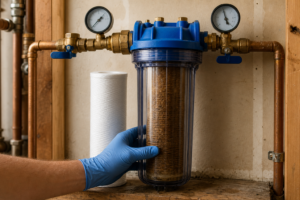
Mineral buildup in a heat exchanger or debris at an inlet filter can affect water movement and heat transfer. That may contribute to noise, weak flow, temperature changes, or an error, but noise does not prove that scale is present or that flushing is the correct repair.
Maintenance depends on the model, water conditions, installation, and observed condition. Do not open service valves or circulate chemicals without the manufacturer-approved procedure and suitable isolation equipment.
When inspection confirms that maintenance is appropriate, tankless flushing in Boerne may be part of the service discussion. If the sound is paired with alternating hot and cool water, document that separate tankless temperature-fluctuation pattern as well.
Safe Observations to Make Before Service
You can collect useful information without touching the heater:
- Write down the sound in your own words and note whether it is steady, pulsing, or intermittent.
- Record when it starts in relation to opening or closing a hot-water fixture.
- Note which fixtures are running and whether the condition changes with household demand.
- Photograph the displayed error exactly as it appears without clearing it repeatedly.
- Note whether hot-water flow, temperature, or delivery time changed at the same moment.
- Record recent plumbing, maintenance, utility, or power events that happened before the sound began.
- Look from a safe distance for visible leakage, cabinet movement, pipe movement, or a disconnected vent.
- Note whether the sound seems to come from the heater, the wall, or connected piping.
- Keep the unit’s model information and owner’s manual available for the appointment.
Do not remove a cover, touch a vent, tighten fittings, manipulate a gas valve, or repeatedly run hot water to make the sound louder.
Stop Using the Heater for Urgent Warning Signs
Leave the area and follow the gas utility’s emergency instructions from a safe location if you smell gas. Do not light a flame, operate an electrical switch, or use a phone inside the affected building.
Treat a carbon-monoxide alarm, smoke, sparks, a burning electrical odor, abnormal combustion odor, or a visibly damaged or displaced vent as an immediate stop-use condition. Move to fresh air and contact the appropriate emergency or utility service.
Stop hot-water use if the unit or connected piping moves violently, water is entering the cabinet, or leakage is reaching wiring, an outlet, or another electrical component. Do not touch wet electrical equipment.
For an active plumbing leak or a water-shutoff problem that cannot be handled safely, Pulliam Plumbing’s emergency plumbing service can evaluate the plumbing condition. Gas and carbon-monoxide emergencies still require the gas utility or emergency services first.
What a Professional Diagnosis May Include
A condition-led diagnosis starts with the exact model, operating sequence, error history, sound timing, and accompanying symptoms. A technician may reproduce the condition under controlled demand and inspect visible mounting, pipe support, service-valve position, venting, and leakage.
Depending on the unit and evidence, evaluation may also include water flow, pressure, inlet and outlet temperature, inlet-filter condition, maintenance history, heat-exchanger restriction, fan or pump operation, sensors, ignition, combustion, gas supply, condensate routing, and electrical connections.
Not every test applies to every heater. The findings should identify what was observed before a repair, cleaning, adjustment, or replacement is recommended. A new sound by itself is not enough reason to replace the unit.
Schedule Tankless-Water-Heater Service in Boerne
If your tankless water heater has developed a new rattle, bang, hum, whistle, click, or vibration, Pulliam Plumbing can evaluate the sound as part of the complete hot-water and plumbing condition.
Review Pulliam Plumbing’s tankless water heater repair service, then contact Pulliam Plumbing with the sound timing, affected fixtures, error display, and any flow or temperature changes you observed.